


Which truck’s bed holds up better for job sites in Fairhope, AL — the 2026 Toyota Tundra or the 2026 Ford F-150?
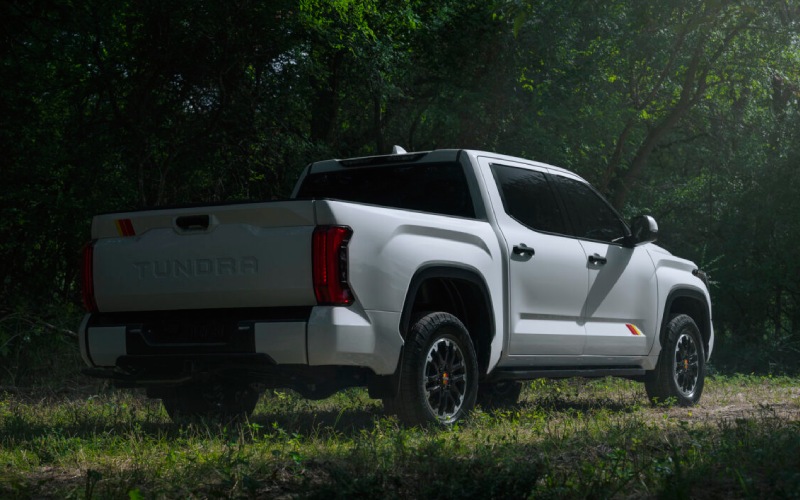
Eastern Shore Toyota – Which truck’s bed holds up better for job sites in Fairhope, AL — the 2026 Toyota Tundra or the 2026 Ford F-150?
When you work around coastal Alabama, your truck bed takes a beating. Between salty breezes off Mobile Bay, frequent rain, and constant loading and unloading of tools and materials, durability matters as much as payload numbers. That’s why one of the most common questions we hear is simple: which bed holds up better on job sites in Fairhope, AL, the 2026 Toyota Tundra or the 2026 Ford F-150?
Both trucks bring serious capability, but the way they’re built sets them apart. Tundra uses an aluminum-reinforced composite bed across the lineup. The F-150 uses a high-strength aluminum-alloy bed. Each has a mission. Aluminum keeps weight low and resists rust. Composite resists dents, dings, and scratches with impressive toughness while also avoiding corrosion. On job sites where lumber slides, buckets bounce, and pallets get nudged into place, that composite surface gives the Tundra a practical edge in day-to-day durability.
What really matters on a Gulf Coast job site
Let’s define “holding up better.” In our coastal climate, you want a bed that shrugs off impacts, doesn’t mind moisture and salt in the air, and cleans easily at the end of the day. You also want tie-down flexibility and lighting to keep work moving when a late call sends you out after sunset. The Tundra’s composite bed and thoughtful utility touches are designed to meet those needs without drama.
Material science, simplified
The 2026 Toyota Tundra’s bed is a high-strength sheet-molded composite reinforced with aluminum. Composite doesn’t dent the way metal does, so contact from toolboxes, coolers, and stones typically leaves far less visible marking. It also won’t corrode. The Ford F-150’s aluminum-alloy bed is light and fully rust-proof, but aluminum can be more susceptible to cosmetic dents and scuffs when heavy objects shift unexpectedly. In the real world, that means fewer “ouch” moments for Tundra owners when a loader finds a lip or a strap loosens on a rough patch of County Road 98.
Bed lengths and daily maneuvering
Both trucks offer multiple bed lengths so you can balance cargo space with parking-lot agility in downtown Fairhope. Tundra’s 5.5-, 6.5-, and 8.1-foot beds give you options for ladders and conduits without always needing a bed extender. The F-150’s 5.5-, 6.5-, and 8.0-foot beds track closely. Where the Tundra stands apart is how that composite material helps the bed look newer, longer—useful if your truck doubles as family transport on weekends.
Real-world scenarios we see every week
Picture these common moments. You back down a damp ramp to pick up materials at a bayside site; tires sprinkle grit into the bed while you toss in concrete mix. Later, you slide a skid of pavers into place with a pallet jack. The Tundra’s composite surface handles abrasive grit and point impacts without the same risk of dings that come with aluminum. At cleanup, a rinse lowers the temperature of a sunbaked bed quickly, and composite isn’t fazed by the shift.
Utility and visibility that complement durability
Durability is step one. Step two is control. The Tundra pairs its tough bed with available bed lighting, smart tie-downs, and camera tech that makes site work more precise. The available Panoramic View Monitor offers a 360-degree perspective right on the available 14-in. touchscreen, and the available Trailer Backup Guide with Straight Path Assist can help you ease a loaded trailer into a narrow cut. Ford offers helpful camera and towing tech as well, but Toyota’s big display and clean menus make the process feel straightforward even when you’re working after hours under floodlights.
Head-to-head highlights
- Bed material: Tundra uses an aluminum-reinforced composite that resists dents, dings, and corrosion; F-150 uses high-strength aluminum alloy that resists rust but can show dents more readily.
- Bed lengths: Both offer short, standard, and long beds; Tundra’s 8.1-foot option adds a touch more space for conduit, form boards, and pipe.
- Everyday cleanup: Composite surfaces rinse easily and don’t mind frequent washes after salty, rainy days near the Bay.
- Camera support: Tundra’s available Panoramic View Monitor and towing guidance tools simplify tight maneuvers when space is scarce.
Frequently Asked Questions:
Do I still need a spray-in liner with the Tundra’s composite bed?
Many owners skip it because composite is already designed to handle abrasion and impacts. If you routinely haul loose aggregate or sharp-edged scrap, a liner or bed mat can add grip and protect against concentrated wear, but for most crews the composite surface alone holds up very well.
How does the Tundra’s bed handle salt air and rain?
Composite does not rust, and the aluminum reinforcement is protected. Frequent rinsing is always wise in coastal environments, but you won’t battle corrosion the way you might with unprotected steel.
Will the F-150’s aluminum bed corrode?
Aluminum resists rust, which is a plus in coastal climates. It can oxidize over time if finish is damaged, and cosmetic dents are more likely with point impacts. Many F-150 owners add liners or mats to mitigate those effects.
Is there a payload advantage to aluminum over composite?
Both trucks post strong payload capacities depending on configuration. If your work is payload-critical, compare specific trims and axle setups. For many Fairhope crews, the durability characteristics of composite in daily abuse are the deciding factor, not a few extra pounds on paper.
Bottom line for Fairhope job sites
If your workday includes sandy shoes, salty air, and heavy cargo that shifts, the 2026 Toyota Tundra’s aluminum-reinforced composite bed provides real-world toughness that keeps your truck looking professional. You still get the capability and towing confidence that matter after the bed is loaded, along with available camera tech that helps you thread the needle when space is tight. The Ford F-150 remains a capable, well-rounded truck, but its aluminum-alloy bed typically shows dings and scuffs sooner under the same conditions.
Ready to see the materials in person and run through your use cases? Our team at Eastern Shore Toyota is here to help, serving Fairhope, Mobile, and Foley with hands-on guidance and local insight. Bring your questions—we’ll walk you through bed choices, tie-down strategies, and how camera tools can streamline your day from the yard to the site and back again.
0 comment(s) so far on Which truck’s bed holds up better for job sites in Fairhope, AL — the 2026 Toyota Tundra or the 2026 Ford F-150?